Santiago del Estero: England secure win against Argentina after late TMO call
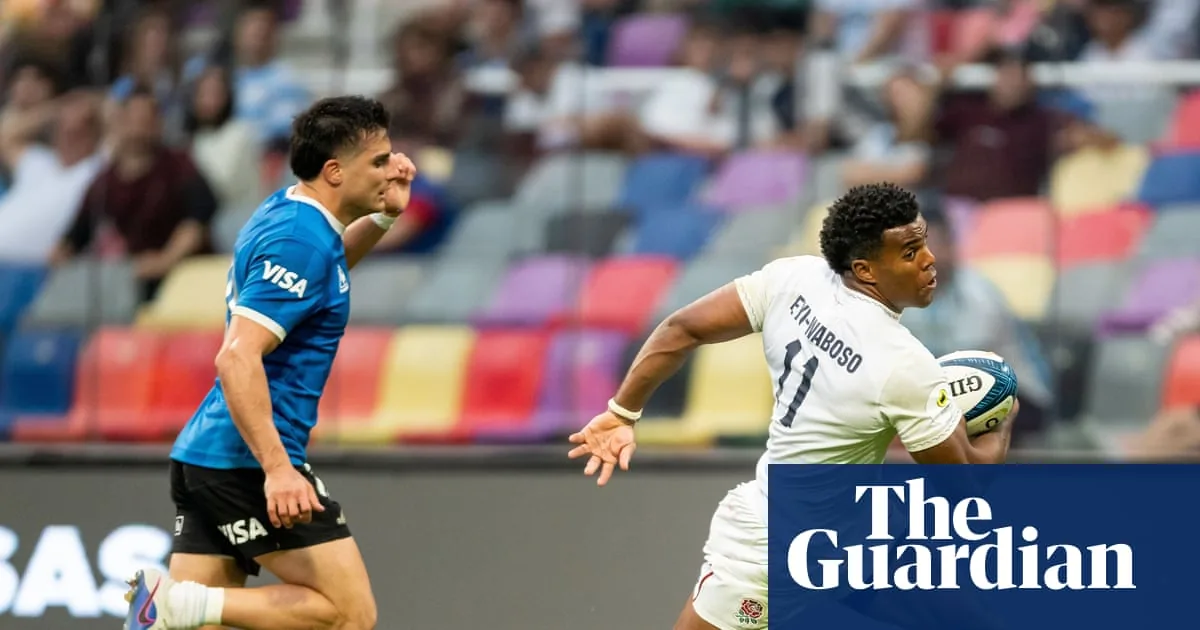

England secured a 31-24 victory over Argentina in a chaotic Nations Championship match, with a controversial late decision by the television match official (TMO) ultimately deciding the outcome in Santiago del Estero. The hosts had a last-gasp try disallowed, which would have brought them level with a difficult conversion to follow.
The match saw England, at one point reduced to 13 players, withstand a strong comeback attempt from Argentina. Referee Angus Gardner initially awarded a try to Argentina wing Bautista Delguy in the final moments of the game. However, TMO Brett Cronan intervened, ruling that Delguy was in touch. Despite Gardner’s repeated suggestions that there was insufficient clear evidence to overturn his on-field call, the try was ultimately chalked off. Henry Slade’s tackle on Delguy proved to be a pivotal moment in the decision.
Match Dynamics and Discipline
The game was marked by numerous disciplinary actions, with a combined total of seven yellow cards issued. England received four of these in the second half, twice finding themselves with only 13 players on the pitch. This continued a trend for England, who have now accumulated 14 yellow cards in their last 10 Tests, a statistic that will likely concern coach Steve Borthwick.
England initially built a significant lead, going into half-time 19-3 up. Tries from Tommy Freeman and two from Ben Earl contributed to this advantage. Freeman’s first try came early, following a precise cross-field kick from Fin Smith. Earl’s second score was set up after England dismantled Argentina’s scrum, allowing him to finish simply. Immanuel Feyi-Waboso also scored an individual try that momentarily quieted the home crowd.
Argentina, however, began to rally, capitalising on England’s disciplinary issues. Jack van Poortvliet and Alex Coles were among the England players sent to the sin-bin. Coles’s infringement at a ruck led to a penalty try for Argentina. Henry Pollock and Emmanuel Iyogun were also shown yellow cards, contributing to England’s numerical disadvantage in the closing stages.
The home side’s comeback gained momentum with tries from Santiago Carreras and Justo Piccardo. Carreras’s try came after strong mauling work early in the second half. Piccardo’s 79th-minute try set up a tense finale, bringing Argentina within a score of drawing the match before the controversial TMO decision.
Significance and Context
This victory follows a challenging period for England, who had only secured one win in this year’s Six Nations. The summer fixtures were seen as crucial for Steve Borthwick’s tenure. Despite a tough defeat against South Africa at Ellis Park, wins over Fiji and now Argentina have positioned England favorably for the upcoming Nations Championship games in November.
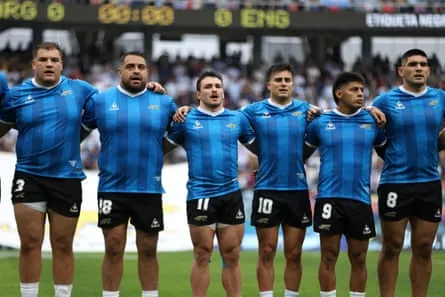
Argentina added a unique element to the match by wearing replica shirts of their football team’s 1986 World Cup kit. This choice was symbolic, referencing a famous victory over England in football. The atmosphere in the 30,000-capacity Estadio Unico Madre de Ciudades was passionate, though it was briefly silenced by Marcus Smith’s try, which came after Henry Pollock’s strong carry.
The match also had a backdrop of recent sporting events between the two nations, coming just three days after England’s football team experienced a defeat by Argentina in the World Cup semi-finals. For England’s players, this win concludes a demanding July schedule that involved extensive travel across three continents. The result pushes England to third in the tournament standings and provides a degree of satisfaction for the squad.
Felipe Contepomi, Argentina’s head coach, reportedly cut short his post-match press conference, citing the celebratory noise from the England dressing room as disrespectful. Meanwhile, Steve Borthwick expressed delight for his players, praising their spirit and togetherness, particularly highlighting Henry Slade’s effort in the decisive tackle.
The match was officiated by Angus Gardner of Australia, with assistant referees Nika Amashukeli of Georgia and Paul Williams of New Zealand, and TMO Brett Cronan also from Australia.
Player Performances and Key Moments
Beyond the tries, several players delivered notable performances. Immanuel Feyi-Waboso was a constant attacking threat for England, repeatedly breaking through the defensive line. His surging run and offload led to one of Ben Earl’s tries. Ollie Chessum, Ellis Genge, and Joe Heyes were also highlighted for their defensive efforts, particularly as the game wore on.
Fin Smith’s accurate kicking game was instrumental in creating attacking opportunities, including the cross-kick that set up Tommy Freeman’s opening try. Marcus Smith, who also slotted in as an emergency scrum-half for the second consecutive week, scored a crucial try in the final quarter, helping England push past the 30-point mark.
For Argentina, Mateo Carreras received a yellow card for a high tackle on Freeman, impacting his team’s momentum. Joaquin Oviedo was also sent to the sin-bin for an illegal clearout, further reducing Argentina’s numbers. Despite these setbacks, players like Santiago Carreras, who redeemed an earlier error with a try, kept Argentina’s comeback hopes alive until the very end.
The match highlighted areas for improvement for both teams, particularly in discipline for England, but ultimately concluded with a narrow victory for the visitors on 18 July 2026.
Read Also
Source: bbc.co.uk

As News GB's Senior Football Correspondent, Lewis Hartnell reports on the Premier League, the EFL and the England national side for readers across the country. He reported on south-coast football for a regional title. He holds a degree in Sports Journalism from Solent University and completed an NCTJ diploma. Lewis lives in Southampton, where he watches youth football and follows the transfer market. “The week's training ground decides the weekend's headlines.”