Mercedes explain Russell’s poor start in Hungary
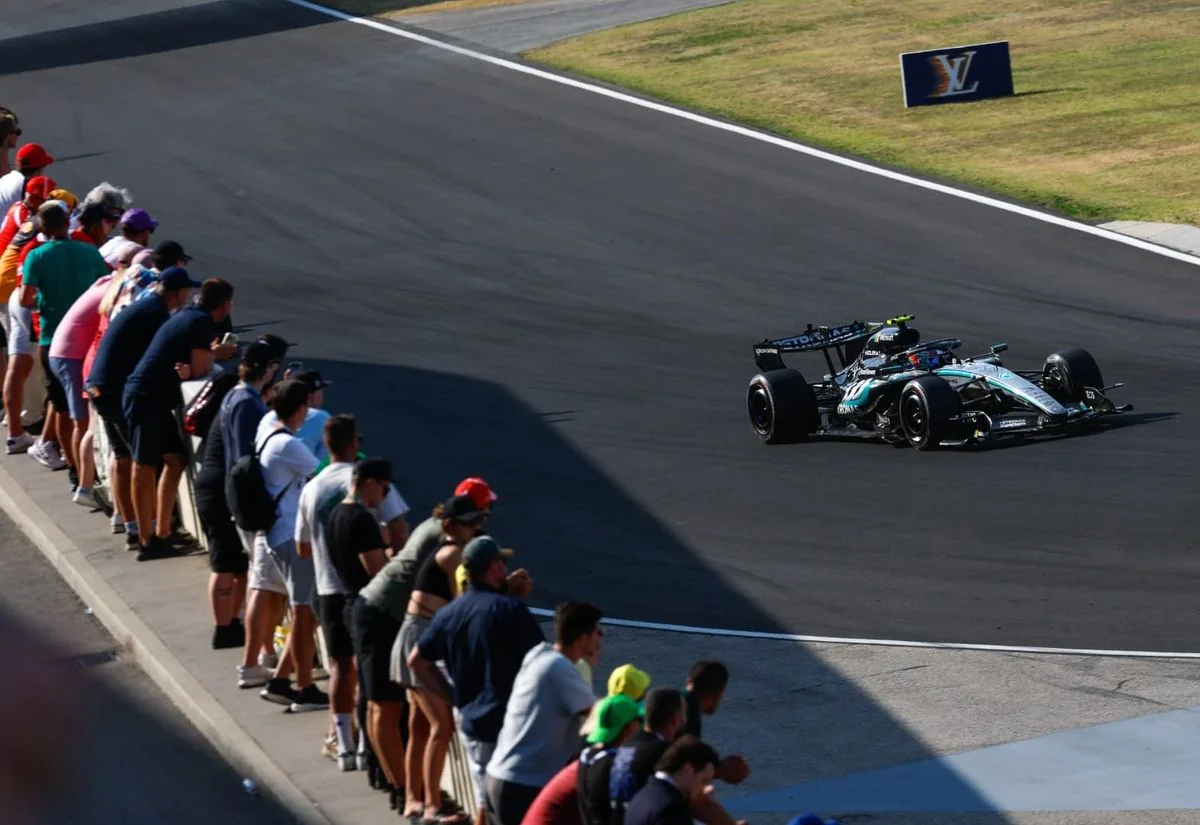

Russell’s Hungarian Grand Prix Start
George Russell experienced a challenging start at the Hungarian Grand Prix, dropping significantly down the order. Starting from sixth position, he fell to 21st, ahead of only Sergio Perez who began from the pit lane. This incident forced Russell into a recovery drive during the race.
Mercedes Deputy Team Principal Bradley Lord clarified that Russell’s car went into anti-stall due to an issue with the throttle input, stating that Russell was not at fault. The car had “much too little throttle” when the starting lights went out.
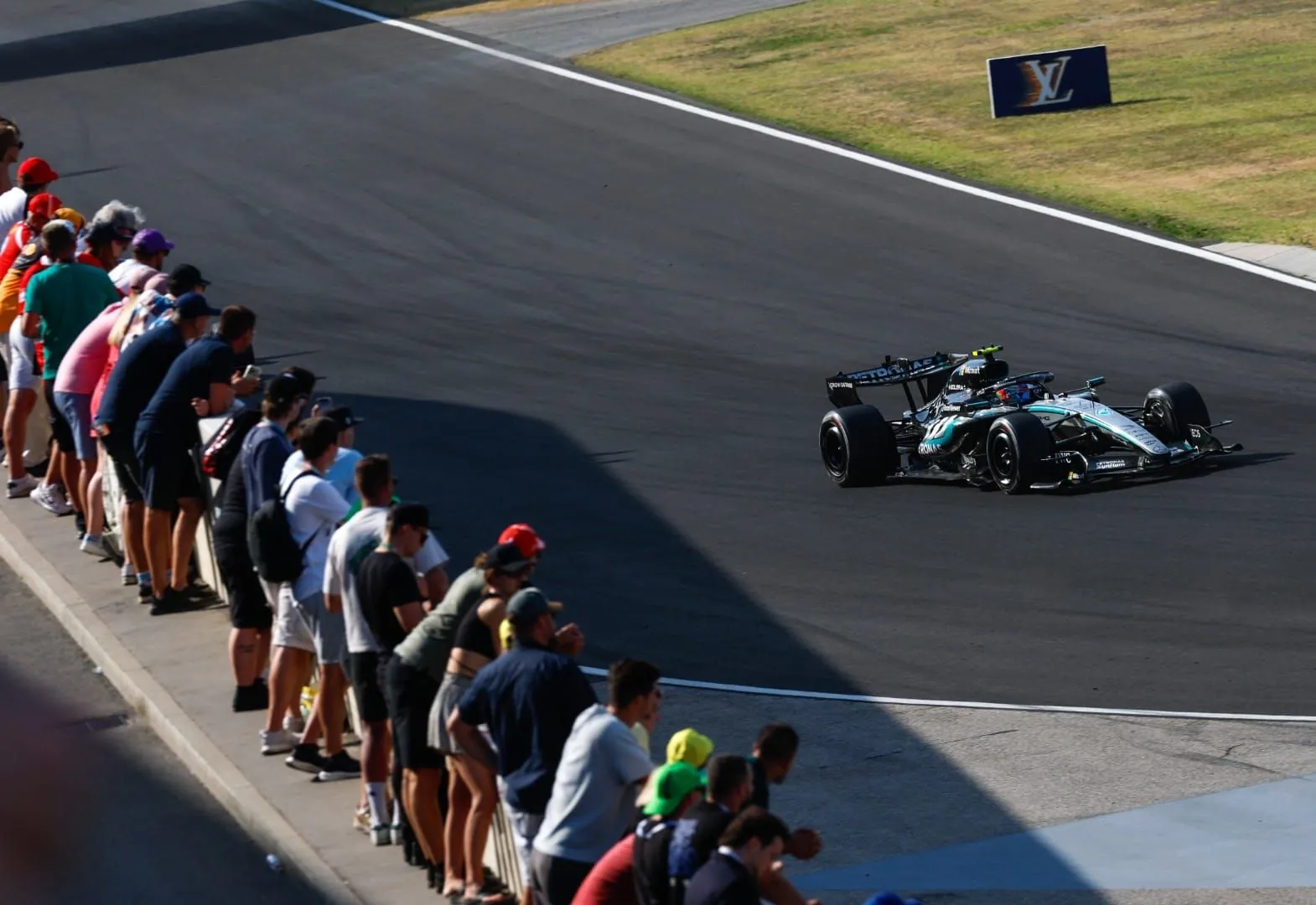
Technical Explanation of the Issue
According to Lord, as drivers maintain their “wait revs” before the start, Russell’s engine RPM unexpectedly rose disproportionately to his throttle input. The revs reached the maximum RPM allowed, hitting the rev limiter. Despite Russell’s attempts to regain control and optimise his start, he was unable to do so.
When the lights went out, Russell was lifting off the throttle to under 10% demand, resulting in insufficient power for a successful launch. This led to the anti-stall system engaging, causing his car to fall to the back of the field. Initial suspicions regarding a “top of the pack” issue, which Kimi Antonelli had considered, were later ruled out by team analysis.
The “top of the pack” issue relates to how drivers manage the 2026 turbo hybrid engines during the start sequence. Drivers need to hold high revs to build exhaust energy and reduce turbo lag. This process charges the battery, and if the battery is full, the MGU-K cannot provide a load, affecting turbo spooling and potentially cutting off fuel flow and throttle opening.
Mercedes had previously addressed similar issues during pre-season testing. However, analysis after the Hungarian Grand Prix indicated that the problem was specifically with the car’s rev control management on the grid. Russell himself noted that the engine was “revving all over the place” and not responding to his throttle inputs.
Recovery and Broader Impact
Despite the difficult start, Russell managed an “incredible recovery drive,” as described by Lord. He worked his way through the field, picking off cars one by one during the first stint. He ultimately finished in seventh position, securing points for the team.
Russell was also affected by the timing of the Virtual Safety Car (VSC), which was deployed one lap after his second pit stop. Had the VSC appeared earlier, he might have been able to benefit from a “free stop” and potentially finish in an even higher position.
Mercedes Team Principal Toto Wolff acknowledged that something unusual had occurred, noting that Russell gave about 10% throttle, and the engine revved to its maximum before bogging down. Russell expressed his frustration, stating that he had never experienced a season like this in his career and that the team is working to understand and resolve these issues.
The start sequence in Hungary was noted to be longer than typical, lasting around 13 seconds from the blue lights flashing to the red lights going out, which is at the upper end of the normal window. This extended duration may have contributed to the problem. Russell is currently third in the championship standings with 160 points.
Source: formula1.com

As News GB's Senior Football Correspondent, Lewis Hartnell reports on the Premier League, the EFL and the England national side for readers across the country. He reported on south-coast football for a regional title. He holds a degree in Sports Journalism from Solent University and completed an NCTJ diploma. Lewis lives in Southampton, where he watches youth football and follows the transfer market. “The week's training ground decides the weekend's headlines.”