Spain secure World Cup victory against 10-man Argentina in extra time


Spain claims second World Cup title
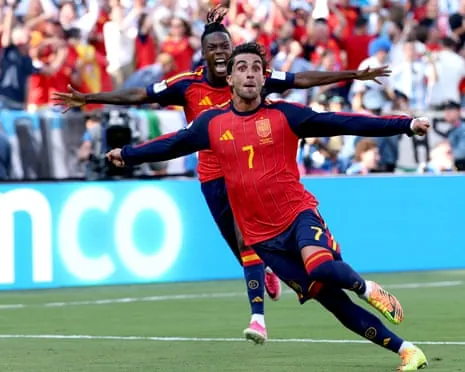
Spain has secured its second World Cup title, overcoming Argentina with a 1-0 victory in extra time. The decisive goal came from Barcelona winger Ferran Torres, who broke the deadlock in the 106th minute of a match marked by Argentina’s defensive tactics and a late dismissal.
The game saw Spain dominate possession and attempts on goal, registering 20 shots compared to Argentina’s two. Argentina’s strategy of disrupting play ultimately backfired when Enzo Fernández received a second yellow card, reducing his team to 10 men for the extra time period.
The winning goal originated from a cross by Pedro Porro, which Nico Williams kept in play at the back post. Torres then capitalised on the opportunity, firing past Argentina’s goalkeeper Emi Martínez. Martínez had previously made a series of saves to keep his side in the contest.
Match details and controversies
The final, held at the New York New Jersey Stadium, was described by Fifa president Gianni Infantino as a significant event. Infantino watched the match from Donald Trump‘s private box, alongside other notable figures including the Canadian prime minister, Mark Carney, Mexico’s president, Claudia Sheinbaum, and King Felipe of Spain.
The match itself kicked off six minutes later than scheduled due to extensive pre-game entertainment. This included a rendition of the Star Spangled Banner by Jennifer Hudson and a performance of the Fifa anthem, Desire, by Robbie Williams. Tom Cruise also delivered a speech. The half-time show, featuring artists such as Madonna and Justin Bieber, extended the interval to 27 minutes and 20 seconds, marking the first time pop stars were permitted on the pitch during a World Cup final.
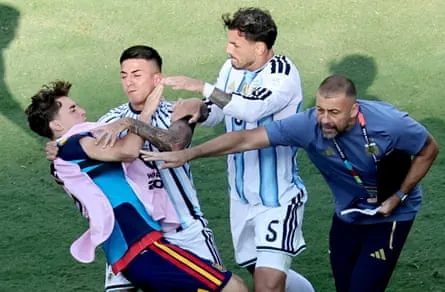
Following the final whistle, there were aggressive reactions from some Argentine players. Nahuel Molina and Leandro Paredes were notably involved in a brief skirmish, with Paredes pushing Gavi to the ground, resulting in his dismissal.
Tactical approaches and fatigue factors
The encounter was a clash of distinct styles. Spain showcased a patient, possession-based approach, which had served them well in the knockout stages, winning all four matches in 90 minutes. This contrasted with Argentina’s resilient, but physically demanding, journey to the final, which included extra-time matches against Cape Verde and Switzerland, and late victories against Egypt and England.
Analysts had suggested that Argentina’s energy levels might be a critical factor, especially against a Spanish side that had enjoyed an extra day of rest. Historical trends in major tournament finals since Euro 2004 indicate that the team with an additional day of rest has won 15 out of 20 finals. This fatigue factor was anticipated to potentially cause Argentina to struggle if they fell behind early in the match.
Both teams were also noted for their fouling tendencies. Argentina had been observed to foul frequently in previous matches, while Spain is also adept at making fouls to slow down play when necessary. Across their 14 major tournament games, Spain averaged 12.5 fouls per 90 minutes. The referee for the final, Slavco Vincic, is known for awarding a high number of fouls in Champions League matches, with an average of 23.6 per game over the last five seasons for referees with more than 15 games.
Despite Lionel Messi making his final World Cup appearance, Argentina did not register a shot on goal until the 115th minute, when Messi struck the ball towards Mikel Merino.
Read Also
Source: theguardian.com

As News GB's Senior Football Correspondent, Lewis Hartnell reports on the Premier League, the EFL and the England national side for readers across the country. He reported on south-coast football for a regional title. He holds a degree in Sports Journalism from Solent University and completed an NCTJ diploma. Lewis lives in Southampton, where he watches youth football and follows the transfer market. “The week's training ground decides the weekend's headlines.”