Tour de France anti-doping body rejects favouritism claims amid night-time testing controversy

Anti-Doping Measures Under Scrutiny
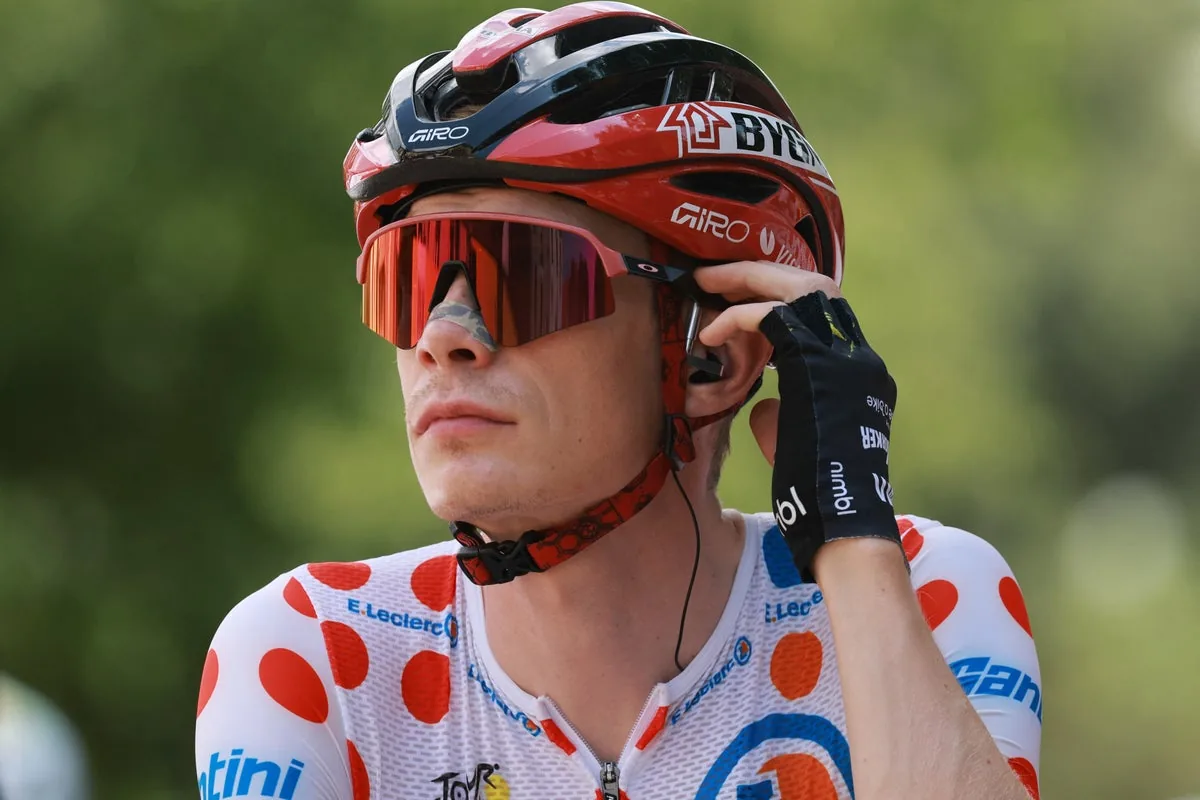
Anti-doping authorities at the Tour de France have addressed accusations of preferential treatment concerning French rider Paul Seixas, who is currently fourth overall. While Seixas and his Decathlon CMA CGM team underwent biological passport testing on Monday evening, the 19-year-old has not yet been subjected to the nocturnal tests that race leader Tadej Pogacar and the now-withdrawn Jonas Vingegaard experienced.
Matej Mohoric of the Bahrain Victorious team, who was tested at 5am, raised concerns about equal treatment, noting that Seixas had not undergone similar night-time testing. The International Testing Agency (ITA), responsible for the anti-doping programme, denied any bias. They stated that their decisions are based on facts, risk assessments, performances, scientific results, intelligence, investigations, and data analysis, aiming for impartiality.
The UCI, professional cycling’s governing body, has endorsed the ITA’s night-time testing regime but emphasised that such controls outside normal hours remain an exceptional measure, reserved for limited and justified circumstances. The ITA also stated that consideration is given to minimising the impact of testing activities on riders, while still ensuring the effectiveness of the anti-doping programme.
Impact on Riders and Race
The night-time tests have sparked debate, particularly after Jonas Vingegaard crashed out of the race following a 2am test. Some speculate that disrupted sleep could have been a contributing factor to his lapse in concentration. Pogacar was also woken at 5am and reported difficulty returning to sleep afterward. Five teams have reportedly had riders tested between 11pm and 6am during the 2026 edition of the race, which is outside normal testing hours and typically rare.
The UCI acknowledged that night-time testing can disrupt riders’ rest and recovery but reiterated that the fight against doping is an absolute priority. Former rider Jonathan Vaughters, now boss of EF-Education Easypost, supported the nocturnal tests, suggesting they are effective in preventing micro-dosing of performance-enhancing drugs like EPO and HGH. He noted that if the UCI had tested riders at 2am in 2001, it could have saved the sport years of drama.
Conversely, the cyclists’ union, the CPA, expressed disappointment with the current anti-doping direction, arguing that waking riders in the middle of the night is potentially dangerous and unnecessary. CPA president Adam Hansen highlighted that cyclists are unique in funding extra doping controls, long-term sample storage, and data analysis out of their own pockets. He suggested that funds should be invested in upgrading laboratory equipment for more precise tests rather than increasing the number of tests.
On Wednesday, Jasper Philipsen secured his first win in this year’s race during the 17th stage, a 175-kilometre route from Chambéry to Voiron. The stage saw a breakaway succeed, with Philipsen leading a reduced peloton. Meanwhile, Adam Yates, a key support rider for Pogacar, was reportedly suffering from a stomach bug, crossing the finish line third from last. Pogacar noted that Yates looked better on Wednesday but acknowledged the lingering effects of a bad day.
The ITA is also exploring other methods, including a feasibility study into using cyclists’ power data as part of its anti-doping strategy. This Swiss group is collaborating with five teams to gather data to support traditional testing methods. The results of the night-time tests will be published according to the ITA’s public disclosure policy, only in the event of an anti-doping rule violation.
Read Also
Source: theguardian.com

Amelia Stockwell is a Sports Reporter at News GB. She covered two Commonwealth Games for a national outlet. She focuses on tennis, cricket and athletics and is known for clear, deadline-driven reporting. She holds a degree in Sport and Media from the University of York and completed an NCTJ diploma. Now based in York, she runs with a local club and follows county cricket. “The quiet stories often matter most by the end of the season.”