Norway face questions after resting Erling Haaland against France in World Cup 2026

Norway’s strategic changes
Norway opted to make 10 changes to their starting lineup for their final group stage match against France in the World Cup 2026. This decision saw star striker Erling Haaland, who had scored four goals in the previous two group games, begin the match on the bench. The team’s manager, Stale Solbakken, described the decision to rest players as a “no-brainer,” citing advice from the physio, health, and medical departments, as well as some players themselves. The only consideration, according to Solbakken, was for the Norwegian fans who would have wanted to see Erling and Martin Odegaard play.
The changes were made following a summary after the Senegal game, which indicated that five or six players were significantly affected after 80 minutes of play, including the entire defensive line and one or two midfielders. Norway had already secured their place in the knockout stages prior to this match. Former England striker Ian Wright commented on the decision before the game, stating that if Erling Haaland needed rest for the later stages of the tournament, he would take it.
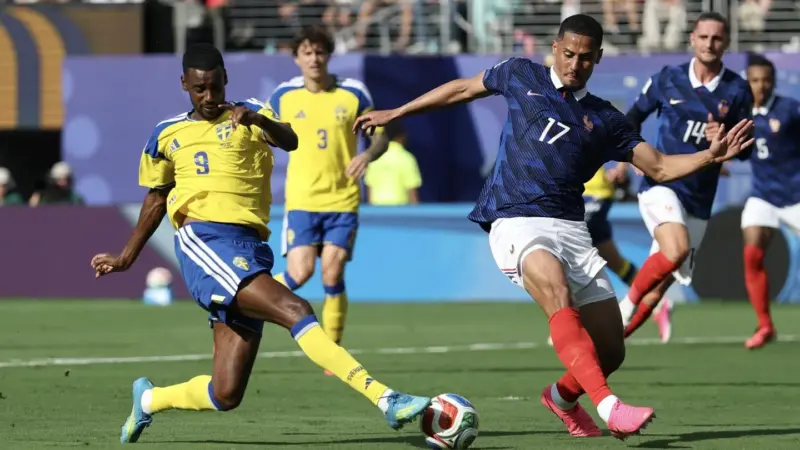
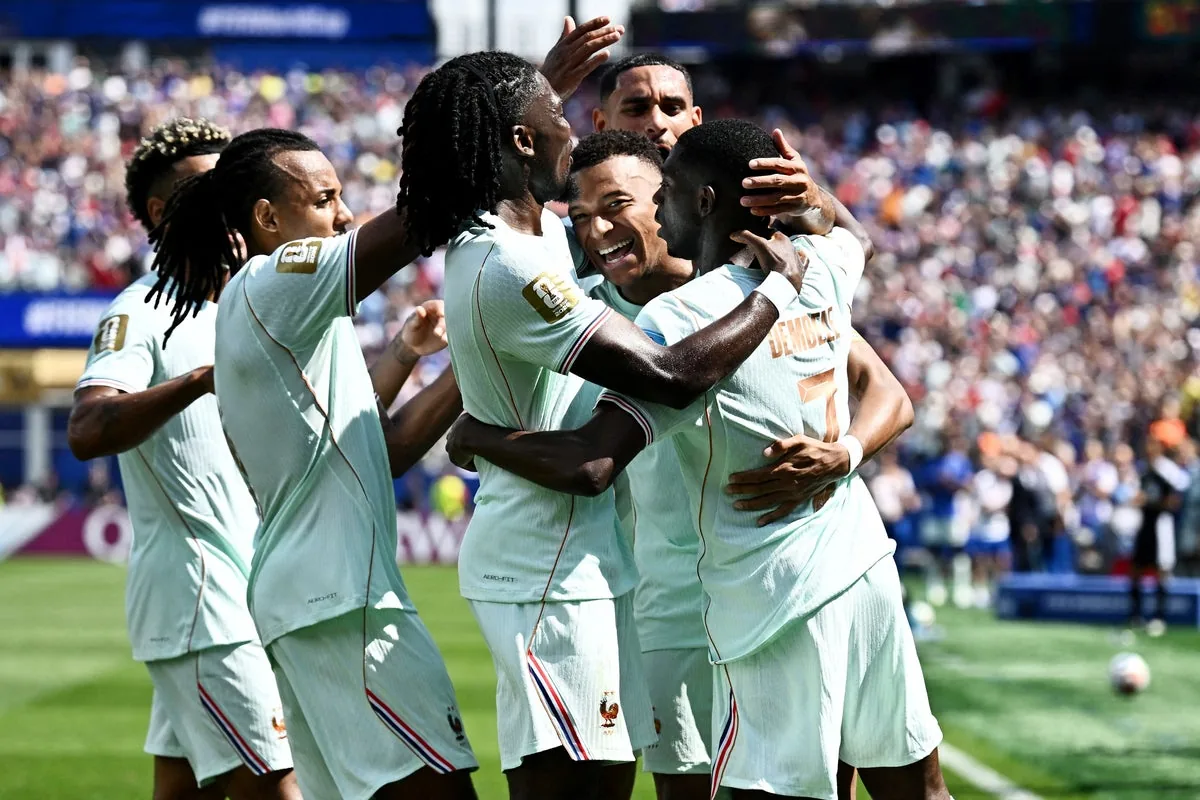
Despite Norway’s extensive changes, France secured a 4-1 victory at Boston Stadium. Ousmane Dembele scored a hat-trick within 25 minutes of the first half. Jorgen Strand Larsen, Haaland’s deputy, missed a penalty that could have reduced France’s lead to 3-2 after half-time. Haaland had previously expressed his thoughts on facing France after scoring two goals in a 3-2 win over Senegal, stating he “couldn’t care too much about that game now” and that France would “probably going to win against us” and “probably going to win the whole tournament.”
Impact of the decision
The decision to rest key players sparked debate among pundits. Ian Wright expressed his surprise at Norway’s 10 changes, especially since they had fielded the same starting XI for their wins against Iraq and Senegal. Former Scotland winger Pat Nevin highlighted the physical style of play adopted by the Norwegians. He questioned whether it was worth risking injuries to two players by maintaining that style, suggesting that the team likely concluded it was not worth the risk, leading to the changes.
Nevin also noted that a “normal side” from Norway, including players like Haaland, would have presented a different challenge for France, potentially denying them as much space. France assistant Guy Stephan, who was deputising for Didier Deschamps, stated he was not surprised by Norway’s changes, acknowledging that Solbakken was preparing for the round of 32 given Norway had already qualified.
Norway’s manager, Solbakken, defended his choices by pointing to the short turnaround between their match against Senegal on Tuesday and the game against France on Friday. Former Republic of Ireland midfielder Roy Keane supported Solbakken’s reasoning, noting that Norway is not accustomed to tournament football and has different expectations compared to France, who are expected to compete for the World Cup title. Keane suggested that Norway’s priority was to advance from the group stage, which they achieved, and that the manager likely decided to rest players for future matches.
Travel and tournament implications
France topped Group I with three wins out of three matches. Their reward for winning the group is a last-32 showdown at the New York New Jersey Stadium against the runners-up in Group F or G. In contrast, Norway now faces a significant travel challenge, with a 1,100-mile trip for their next game. They are based in Greensboro, North Carolina, and will travel to Arlington, Texas, to play Ivory Coast. Had they topped their group, their travel distance would have been half of what it is now.
Norway is only the fourth team to make 10 or more changes to their starting XI for a World Cup match in the same edition. Spain made 11 changes against Saudi Arabia in 2006 and won their final group-stage game, but later lost 3-1 to France in the last 16. However, Belgium made 10 changes in 2018, defeated Japan 3-2, and then beat Brazil 2-1 in the quarter-finals before being eliminated by France.
Thousands of Norwegian fans travelled to the United States to support their country at the World Cup. While some expressed confusion at the team news, others embraced the moment, performing their Viking-style row celebration throughout the game. Norway is participating in their first World Cup since 1998.
Read Also
Source: bbc.co.uk

Amelia Stockwell is a Sports Reporter at News GB. She covered two Commonwealth Games for a national outlet. She focuses on tennis, cricket and athletics and is known for clear, deadline-driven reporting. She holds a degree in Sport and Media from the University of York and completed an NCTJ diploma. Now based in York, she runs with a local club and follows county cricket. “The quiet stories often matter most by the end of the season.”