Tuchel questions Fifa’s disciplinary process after Balogun decision

England coach Thomas Tuchel has expressed confusion regarding the disciplinary procedures at the World Cup, following Fifa‘s decision not to suspend United States striker Folarin Balogun. Balogun, who received a red card against Bosnia-Herzegovina, was expected to miss the last-16 match against Belgium. However, Fifa opted against an immediate suspension, making him available for the game.
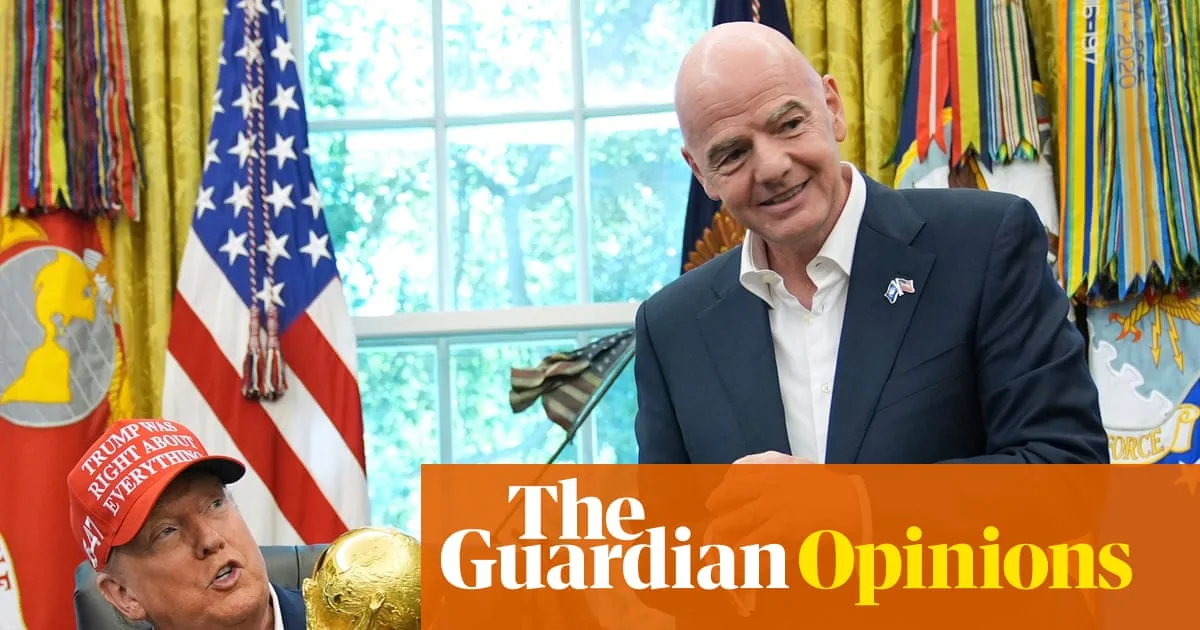
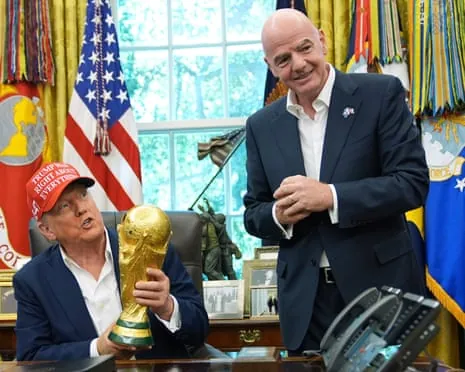
Reports indicate that Balogun’s reinstatement occurred after US president Donald Trump contacted Fifa president Gianni Infantino. On Sunday, Trump publicly thanked Fifa for what he described as “reversing a great injustice.”
Former Fifa president Sepp Blatter, who was succeeded by Infantino in 2016, commented on the situation, stating that “football must never become a playground for political power.” Blatter reiterated this sentiment on Monday, adding that red cards are typically overturned by rules and independent bodies, not political phone calls.
Disciplinary inconsistencies questioned
Tuchel’s comments came after Jarell Quansah was sent off during England‘s 3-2 victory over Mexico. When questioned about potentially appealing Quansah’s ban for the upcoming quarter-final against Norway, Tuchel raised concerns about the consistency of decisions.
“Where does this start and where does this end now?” Tuchel asked. “Can we overturn it or not overturn it? What’s going on? Where to draw the line is the question that I ask. I have no answer to that.”
Both Balogun and Quansah were dismissed following reviews by the video assistant referee (VAR). Balogun’s red card was issued after his foot made contact with the ankle of Bosnia’s Tarik Muharemovic, while Quansah received his for a sliding challenge on Mexico’s Jesus Gallardo, catching him high on the shin.
Apart from Balogun, the other 12 players who have received red cards at the 2026 World Cup have served a suspension for their subsequent match. Fifa’s disciplinary code includes a clause allowing it to “fully or partially suspend the implementation of a disciplinary measure,” which contrasts with tournament regulations stating an automatic suspension for a red card.
Tuchel believes this intervention, which is unprecedented since automatic bans for red cards were introduced at the World Cup, has created uncertainty regarding the rules. He questioned the grounds on which such decisions are overturned and how far this precedent might extend.
“I think first of all, to be very clear, that it [Balogun] was not a red card,” Tuchel stated. “But VAR got involved and obviously three people from VAR and the referee checked it were then of the opinion that it was a red card, so the decision is made. Who overturns this decision and when and on what grounds? And how far does this go now? It’s just strange for me. We just want to have consistency in the decisions.”
Tuchel also highlighted the VAR process in his defence of Quansah, noting that the incident was not initially called a foul by the referee. He criticised the use of still images for VAR decisions, stating, “You cannot take decisions on a still in a football match. It’s just not possible.”
Impact and reactions
The decision regarding Balogun has been met with mixed reactions. While many US fans and coach Mauricio Pochettino expressed satisfaction, Belgium head coach Rudi Garcia reportedly expressed his displeasure. The Belgian federation is said to be reviewing its legal options.
Fifa has pointed to a specific article in its bylaws that permits such decisions, and officials have maintained that the disciplinary process is not influenced by external interventions. However, the close relationship between Infantino and Trump has been noted.
Norway head coach Ståle Solbakken also commented on the situation after his team’s victory over Brazil. He described Fifa’s decision as a “big mistake” and expressed sympathy for the United States, suggesting that any victory for them might be perceived as tainted. Solbakken added that the situation is “not good for the sport.”
The intervention has raised questions about the integrity of the tournament, with some suggesting it could overshadow the USMNT‘s performance. Trump welcomed the news of Balogun’s reprieve on social media, thanking Fifa for reversing what he called a “grave injustice” on Sunday.
The USMNT had reached the last 16 of the tournament based on their performances, with Balogun being a key player. Despite this, the perception that the US received an unfair advantage could affect how their advancement is viewed globally. Quansah was the 13th player to be sent off at the 2026 World Cup.
Read Also
Source: bbc.co.uk

Reuben Castle is the Sports News Writer at News GB, covering rugby union, golf and boxing with six years of reporting experience. He moved from print into digital sport news. He holds a degree in Journalism from Coventry University and completed an NCTJ diploma. Based in Coventry, he follows the Open Championship and amateur boxing. “Accuracy first; the analysis can follow.”